Pre and Post Natal Adversity (PPNA)
Many individuals with FASD also have a history of early life adversity – things like abuse or neglect, living in the care system, living in poverty in childhood, as well as other potentially harmful prenatal exposures and early life events.
The effects of prenatal exposure to alcohol and other substances and the effects of early life adversity have been studied by researchers for many decades, but most of this research has overlooked the combination of prenatal and postnatal adversities.
In other words, the research that has been done on the effects of prenatal substance exposures has largely ignored early life adversity, and the research that has been done on early life adversity has largely ignored prenatal exposures.
This is problematic because we cannot be sure whether we are seeing the effect of one thing or another, or what contribution each type of adversity is making to developmental differences.
Doctors and other professionals need to know which exposures are leading to which outcomes, so that they can make more accurate predictions about future support needs, and provide the right kinds of interventions and services.
At the University of Salford, we have been conducting research on the combined effects of pre and postnatal adversities for over 10 years.
A systematic review
We conducted a systematic literature review that revealed that very little research had been published on the combined effects of PAE and early life adversity.
Previous research suggested that children with both PAE and early life adversity were functionally similar to children with just PAE. These studies largely focused on speech, language and communication, but missed out other crucial areas of functioning such as intelligence and perception.
Neuropsychological analysis
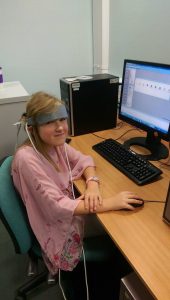
We assessed the damage caused by dual exposure to PAE and early life adversity on brain functioning, intelligence, working memory (the ability to hold and manipulate information in the short-term), inhibitory control (the ability to stop oneself from performing an action that feels natural), empathy (an understanding of the perspective and emotional state of other people) and behavioural difficulties.
We used a combination of tests to measure child development (age 8 – 14); brain-imaging technology, fNIRS (functional near infra-red spectroscopy), to look at brain activity along with a series of cognitive tasks assessed verbal, non-verbal and overall intelligence, working memory and inhibitory
We also conducted interviews with parents and caregivers, to explore their experiences of raising a child or children with FASD.
The key findings from this study supported the findings of the literature review. Children with both PAE and trauma appear to function similarly – in terms of brain activity, intelligence, empathy, inhibitory control, and working memory – to children with just PAE and tend to have more severe difficulties than children with just trauma. Therefore, the difficulties seen in children with both these exposures seem to be primarily caused by PAE rather than childhood trauma.
You can read more about this here: https://salford-repository.worktribe.com/output/1367577
Analysis of clinical data
We conducted an analysis of data from the National FASD Clinic, to look at the additional impact of neglect on neurodevelopmental outcomes in children undergoing assessment for FASD. You can read our blog post about this study here.
Future directions in PPNA research and practice
We have been collaborating with a large international group of researchers to produce a paper that sets out recommended research methods for investigating pre and postnatal adversity and we are preparing to apply for funding to conduct more work in this area.