At the Experimental Psychology Society meeting in Newcastle, PhD students Sena Dokmeci and Paula Schneider presented posters outlining the research plans for the first study of their PhDs.
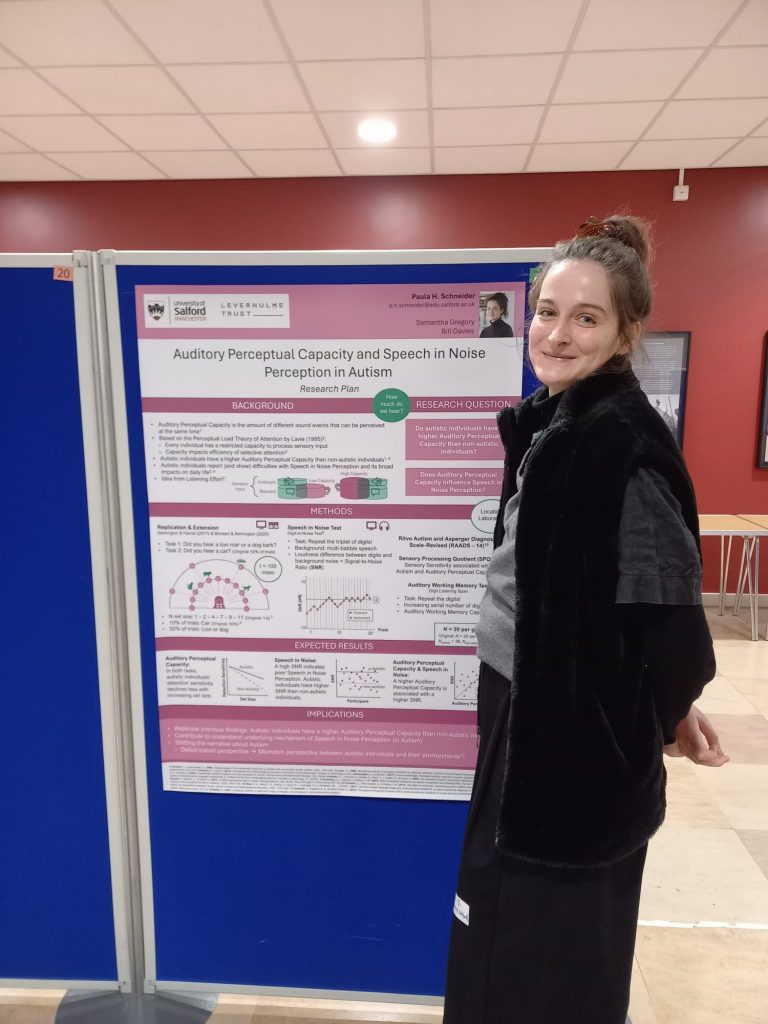
Paula Schneider
Paula’s study explores whether autistic individuals have a higher auditory perceptual capacity than non-autistic individuals, meaning they can process more simultaneous sounds. It also investigates whether this may be linked to difficulties understanding in speech in noisy environments, an issue that many autistic people report as impacting daily life.
Using a behavioural experiment, Paula compares autistic and non-autistic participants by measuring how many identifying a target sound, alongside their ability to recognise speech in background noise.
This research aims to provide deeper insight into auditory processing differences in autism and how they may affect everyday communication and social participation.
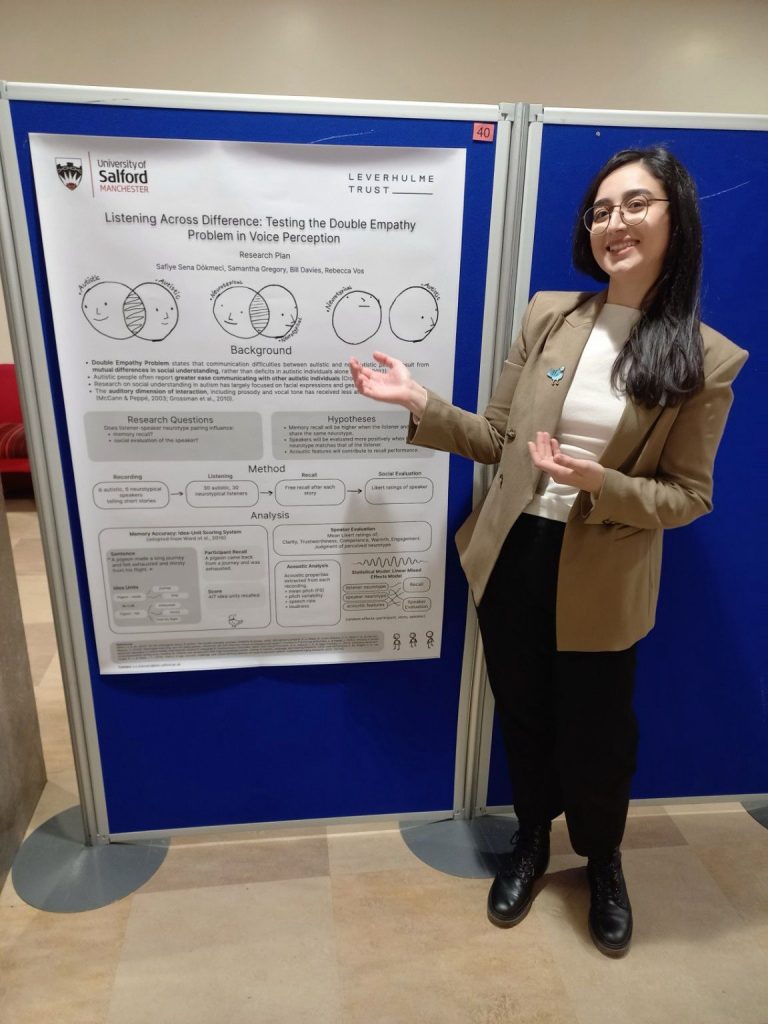
Sena Dokmeci
Sena’s study explores the Double Empathy Problem, which challenges traditional views of autism by highlighting that communication difficulties between autistic and non-autistic people are mutual rather than one sided.
Focusing on the often-over-looked auditory side of social interaction, Sena investigates how autistic and non-autistic individuals interpret vocal cues such as tone, emotion, and prosody. While much research has examined facial expressions and gestures, this study shifts attention to how meaning is conveyed through the voice.
By examining how each group responds to emotional tone in speech, the research aims to provide further support for the Double Empathy Problem and contribute to more inclusive, neo-diversity affirming approaches in clinical, educational and technological settings.