Social Housing
Lindesay Dawe, Tanja Poppelreuter and Colin Stuhlfelder
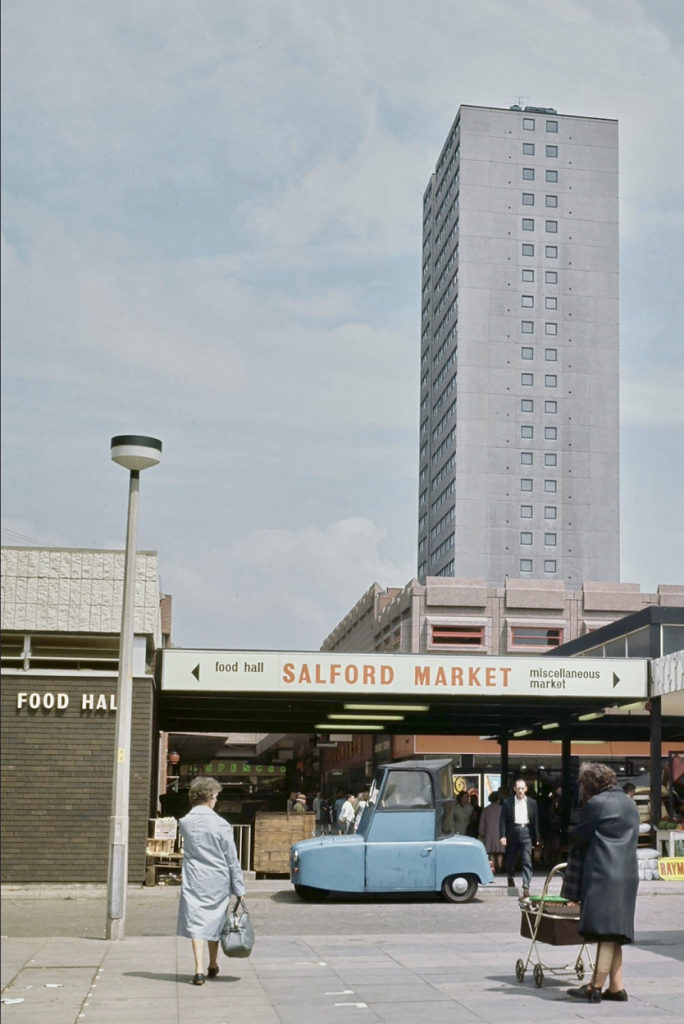
The history of social housing in Great Britain is a story of shifting political ideals, economic pressures, and changing ideas about class, community, and the role of the state. For the professional class in Britain (architects, town planners, administrators) their ambitions for housing – from the late 19th C – were inextricably linked to a purpose of reshaping the city and wider public health reform. Challenges in delivering housing reform through the 20th C were multi-layered as policies, design philosophies, and economic conditions changed. For those who were the prime beneficiaries, the British working class, better housing conditions under municipal authority included rent control, tenant protection and limits on the power of the landlord, although by the mid-twentieth century tensions between expectations and delivery were never far from the surface. The aims of this group is to better understand ideologies that led to the building of different types of housing. We are interested in juxtaposing positions held by councils, planners, developers, architects, landlords and tenants historically and currently. The group also investigates stereotypical notions associated with people living in social housing, social stigmatisation and the aftermath of regeneration and gentrification. We are open to all members of the public and seek young as well as established researchers, members of public institutions, representatives of councils and industries to come together to learn more about the complexities of housing.
Group contributors:
Mr Lindesay Dawe is a Lecturer and researcher at University of Ulster and UK registered architect. He has over twenty years in architectural practice with leading international companies developing new user-oriented research methodologies. His pedagogic & research practise looks at architecture as ‘production’ and architecture as it is ‘inhabited’; the former encompassing building procurement & technology and the latter through elements of anthropology/user studies.
He is a graduate of the Royal College of Art.
Contact: l.dawe@ulster.ac.uk
Dr Tanja Popplereuter is a Reader in Architectural Humanities at the University of Salford, Manchester. Her research interests lie in the field of 20th-century art and architecture with a focus on the perceptions and development of architectural space, social housing, and women in 20th-century architecture.
She led the project “The Modern Backdrop” funded by the Paul Mellon Centre. Tanja also is a member of the Strategic Planning Committee of the US-based Society of Architectural Historians (SAH) and of the Equality, Diversity and Inclusivity (EDI) group of the RIBA North West.
Contact: t.poppelreuter@salford.ac.uk