
We are delighted to present the first in a series of four blog posts from Aliza Syeda, who is taking part in the University’s Widening Participation Summer Programme through a placement with Southern Voices.
The forgotten soldiers of the First World War: Exploring colonialism with Dipali Das.
About this blog:
My name is Aliza Syeda, and I am a participant in the University of Salford Widening Participation Summer Programme 2026. As part of my four-week placement with Southern Voices, I’ll be speaking to members of the organisation to explore the themes behind their upcoming exhibition, Exploring the Legacies of Empire: Perspectives from the Global South, and associated workshops taking place at University of Salford later this year. I hope these blogs encourage others to think more critically about how the histories associated with ‘Southern Voices’ continue to shape our world today.
The history we think we know:
Growing up in England, most of what I learned about World War One focused on trenches, the Western Front and the sacrifices made by British soldiers. Like many other students, I had very limited knowledge on the millions of people from colonised countries who also fought and worked during this war.
Speaking to Dipali Das, a member of Southern Voices, made me think more carefully about whose stories are remembered and whose are often left out. Southern Voices is a community organisation that works with communities from the Global South to encourage conversations around history, identity and social justice. Through projects such as the upcoming exhibition, the group aims to create safe spaces for stories that are often overlooked in mainstream education.
Dipali Das has a background in teaching and educational work within community groups. When she was given the opportunity to join Southern Voices, she was particularly interested in its aim of promoting perspectives from the Global South and drawing attention to histories that are often overlooked.
Growing up in Britan, Dipali was familiar with a version of the First World War that focused mainly on British soldiers, Remembrance Day and the sacrifices made on the Western Front. However, as she grew older and learned more about the history of the British Empire, she realised this was only one side of the story. The contributions of people from South Asia and other colonised countries were rarely spoken about, despite the crucial roles they played during the war.
As a British Bengali woman whose parents and grandparents were directly connected to these histories, making this subject more personally meaningful to Dipali. Through her work with Southern Voices, Dipali saw an opportunity to bring more attention to these overlooked stories and encourage others to learn about a side of history that many people may not have come across before.
A global war, but not always a global history:
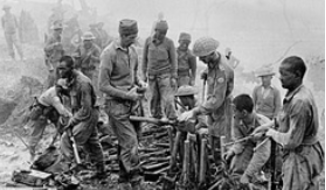
One of the things that stood out to me during my conversation with Dipali was the scale of colonial involvement in the war. The First World War involved around 4 million from the Global Majority and ethnically minoritised communities 1.5 million of whom were from India. As Dipali explains, colonial soldiers and communities “were not given the full respect they deserved”. This can be seen in various situations during the War for example African and West Indian soldiers were kitted out with poorer clothing and equipment, racially mistreated and received lower pay and poorer healthcare. The British also often recruited men from poorer backgrounds, especially those living in rural areas, because they knew a regular income would appeal to people struggling to support their families. Although many had limited education, they were still aware of what was happening around them The British government and armed forces took advantage of the poverty and hardship that these colonial soldiers faced, demonstrating the racial hierarchy that existed within British Empire, where colonial soldiers and communities were viewed as inferior despite the important roles they played during the war. To this day, the contributions of colonial soldiers are not nearly as widely recognised or taught compared to those of white British soldiers. Dipali’s perspective shows that recognising colonial soldiers also means questioning why their experiences were overlooked and what this reveals about colonialism.
Fighting a war that wasn’t their own:
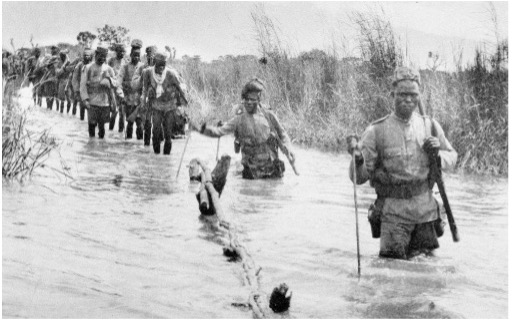
Dipali was particularly struck by the experiences of people in East Africa. At the Belin Conference of 1884-5, the colonial powers had divided African territories between themselves. This enabled them, during the First World War, to then population into a conflict that was created thousands of miles away. Soldiers were in some cases forced to fight members of their own families on the battlefield because they fell either side of colonial borders.. The fighting in German East Africa, now mainland Tanzania, Burundi and Rwanda, lasted throughout the war. The inter-African conflict had long-term social, psychological, environmental and economic consequences. A lot of the time, these soldiers may not have fully understood the political causes of the war and had very limited choices about their involvement. This is because for some, joining the war was linked to economic necessity to support their families. This highlights how colonial powers involved local populations in a European conflict, while the people affected had little control over the decisions that led to it.
What happened when the war ended:
Although the fighting came to an end, the impact of the First World War continued to be felt across colonised countries. Dipali sees this period as an important point in the growing demands for independence.
During our conversation, Dipali also discussed Britain’s use of “divide and rule” as a way of maintaining control over colonised populations. By encouraging divisions between different religious and cultural groups, such as Muslims and Hindus, it became harder for people to unite against the British rule. Dipali sees that these divisions still exist and influence communities to this day, even after they’ve gained independence. This shows how the impact of colonialism did not simply end after the war.
“Colonial amnesia”: why is colonial history often overlooked?
“There is a huge issue with colonial amnesia,” Dipali explained during our conversation. By this, she means that Britain’s colonial past is often left out of education or briefly mentioned. Students often only learn about topics such as transatlantic slave trade, the abolition of slavery or Black History Month activities, but these topics are not explored in great detail or emphasized on how the connect to British history. Dipali questioned why these topics are often treated as something separate from British history when Britain’s development was so closely connected to its empire, as she believes colonial history is also part of British history. Without learning these connections many students are unaware on how colonialism has shaped Britain today.
This part of our conversation stood out to me because I realised how little I had learned about colonialism at school. I had studied the First World War several times, but I had never really thought about how much of the war was connected to the British Empire. I also knew very little about the millions of people from colonised countries who were involved.
Dipali believes colonial history should not be limited to one month, one lesson or an occasional workshop. Instead, it should be included as part of British history students can have a fuller understanding of the past and how it still affects society today.
“Thank You for Teaching Me About My History”
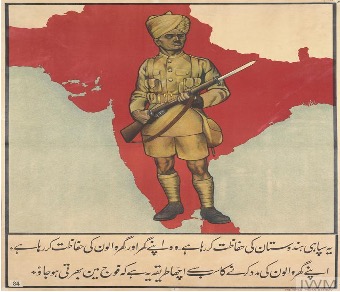
Towards the end of our conversation, Dipali shared a story that had stayed with her. After teaching a session in a school, a young girl came up to her and said, “Thank you for teaching me about my history”.
Dipali found this touching but also upsetting. The girl was grateful to learn about her own history, but she had only been given this opportunity because Dipali had visited her school. Without sessions like this, many young people may never have the chance to learn about histories connected to their backgrounds.
My conversation with Dipali made me realise how much is left out of the National Curriculum regarding the history we are taught about Britain and Empire. Learning about the soldiers from the colonies gives us a better and wider understanding of the First World War and makes sure their experiences and sacrifices are no longer forgotten
Further Reading:
British Library. (n.d.). Untold lives: Colonial troops in the First World War. All blog posts
Chandra, B. (1989). India’s struggle for independence. Penguin Books. India’s Struggle For Independence – Penguin Random House India
Commonwealth War Graves Commission. (n.d.). The contribution of African, Caribbean and Indian soldiers during the First World War. The Commonwealth War Graves Commission | CWGC
Das, S. (2018). India, Empire and First World War culture: Writings, images, and songs. Cambridge University Press. India, Empire, and First World War Culture
Imperial War Museums. (n.d.). The Indian Army in the First World War. Photos Of The Indian Army In First World War | Imperial War Museums
Southern Voices. (n.d.). Exploring the Legacies of Empire: Perspectives from the Global South. Southern Voices – southern voices