Reflections on the emergence of wellbeing in place for asylum seekers and refugees
Dr Josephine Biglin
15th December 2025
Refugees often arrive in the UK with significant pre-existing trauma from war, disaster, and forced displacement: experiences which are deeply disruptive to health and wellbeing. UK asylum policy compounds this harm. Asylum seekers are forced to live in poor housing on a no choice basis, banned from working, and dependant on very meagre benefits which they must prove they are destitute to claim. The figure allocated to these benefits is based on what the poorest 10% of the British population spend per week on essential living items. Therefore, they are systematically made to live in poverty. Even for those granted status, the threat of deportation, or far-right violence, as well as decades of a demonising and hostile press, entrenches long-term precarity. Against this backdrop, the places and practices that offer moments of wellbeing become meaningful.
What do we mean by wellbeing?
Biomedical models define health as the absence of disease, focusing on biological factors and wellbeing is dominantly understood through frameworks that break it into discrete, measurable components. Most of us think of wellbeing as something we can measure: how happy we feel, how financially stable we are, or how well we sleep. This is linked to positive psychology which focuses on acquiring skills for ‘happiness’. However, critics argue that this shifts blame and responsibility from systemic issues on to individuals. This framing, where the individual is constructed as responsible for their wellbeing, is particularly problematic for marginalised groups, including asylum seekers and refugees, who are denied access to the resources these models assume are available, for example secure employment, suitable housing and financial resources.
The focus of my work has been to explore wellbeing in place beyond these dominant ways of thinking about health and wellbeing. Rather than focusing on biomedical forms of health or reports of components of wellbeing I have focused on what is embodied, sensory and practised within various places identified as significant for wellbeing, recognising the need to capture what is active in our world – which is basically everything – we don’t live in a static representation of the world but in something constantly moving and evolving.
My research involved three projects: two studies in community allotments for asylum seekers and refugees and a participatory project using creative methods and walking interviews to explore wellbeing in place for this group. Rather than asking people to explain what wellbeing means to them, I paid attention to what was happening in the places they spent their time, their movements, their senses, and the atmospheres around them. This meant collecting non-standard data such as photography, videos and soundbites as well as noticing things like:
- changes in mood when someone steps from a cramped flat into an open city square
- how people breathe differently when surrounded by trees
- the sense of energy that comes from walking through a busy space
- nostalgic smells and tastes
Atmospheres of Place
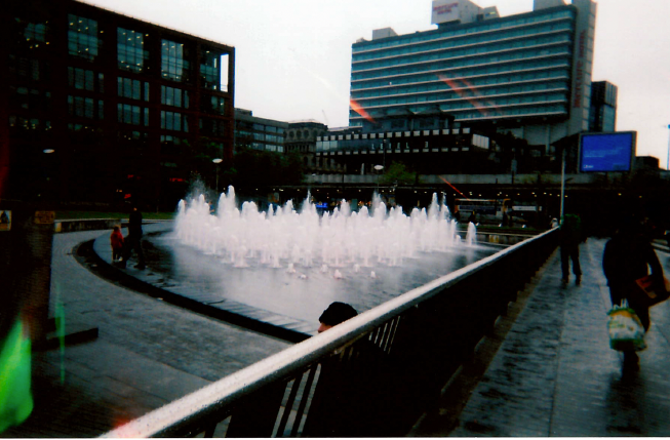
The atmosphere of a place is something we generally all recognise but don’t always think much about. In this research we paid attention specifically to how atmospheres altered how we felt in our bodies. For example, in one walking interview, we began inside a participant’s asylum accommodation where a housing officer had recently removed their child’s pet bird without warning, a moment that caused immense distress. As the story of this unfolded, the atmosphere inside the flat felt hostile, grey and oppressive. In contrast as we began a walking interview, the city brought a completely different energy: traffic, children laughing, the sound of a tram, food smells drifting from shops, the warmth of the afternoon air. Piccadilly Gardens felt colourful, open, and alive. However, at one point, an encounter with an intoxicated man and the police’s dismissal of one of the participants concerns reminded us of the everyday experiences of racialisation and exclusion. Later, sharing sweet rice back at their flat brought warmth and comfort. This constant ebb and flow show how wellbeing isn’t something achieved, but emerges in moments, shaped by movement, people, and place.
Embodied experiences of wellbeing
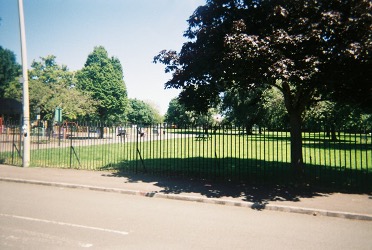
Many participants spoke about loneliness and places like Piccadilly Gardens helped simply by being with other people, the footsteps, the chatter, the movement of others, created a sense of togetherness. This simple presence of other bodies helped people feel less alone.
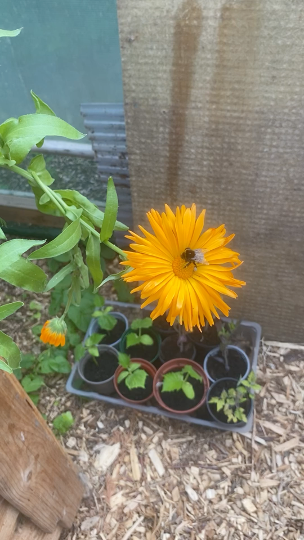
In the allotments, participants would often draw attention to the pre-cognitive (before thought) embodied sense experience in the allotment. One man described goosebumps travelling from the top of his head down through his body while gardening. Another woman spoke of arriving with ‘heaviness’ and leaving with her body feeling light.
Nostalgia Through the Senses
Across all projects, people often sought out familiar sensory experiences. For some, UK supermarkets felt overwhelming, the metal of the trolley, the bright lights, the crinkly feel of the wrappers. In gardens, however, they could reconnect with familiar practices: digging, planting, picking vegetables. Smells of soil, spices, and cooked meals carried memories that weren’t just emotional but were were embodied.
So What Does This Mean for Wellbeing?
For refugees and people seeking asylum, their lives remain shaped by uncertainty, racism and exclusion, and place experiences cannot erase those realities (although there is of course potential for grassroots mobilisation and activism to flourish in these spaces). But the moments people created, through gardening, walking, being in busy spaces, sharing food, were more than temporary escapes. They were forms of survival. These moments were energy, comfort, and connection emerged in conditions systematically designed to wear them down are demonstrative of ‘practising wellbeing’.
This has important implications:
- Communities need accessible, welcoming public spaces with nature, water, art, and room to move.
- People need places where they can practise familiar practises such as gardening, cooking, walking.
- Funders and policymakers must move beyond narrow wellbeing measurements and recognise that wellbeing is lived, felt, and constantly changing.
Here we see wellbeing not as a destination, internal, measurable but as something that is practised, active and located in embodied and sensory feeling states.
Check out the academic article here (open access) and the creative data.
Dr Josephine Biglin is community/sociological psychologist working in the field of asylum, place, wellbeing and citizenship. She is a qualitative researcher whose methodology is at the intersection of discursive approaches; sensory and embodied ways of knowing and arts-based participatory methods.
© 2025 University of Salford